Operating theatres and ICUs are two of the most demanding environments in a hospital. There are biological fluids, floors that get wet or are disinfected frequently, sensitive electronic equipment and shifts in which staff barely sit down. That is why it is worth knowing which requirements footwear must meet and how to choose it.
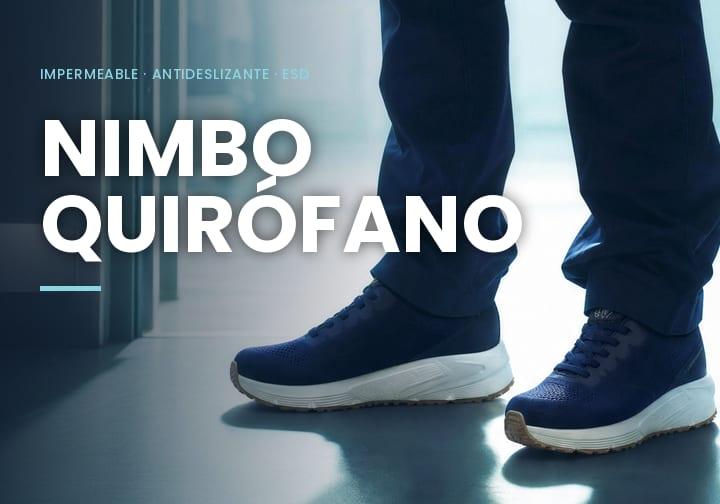
In this guide we review the hygiene and safety requirements, the applicable standards (UNE-EN ISO 20347:2022 and 20345:2022), the differences between the operating theatre and the ICU, and how NIMBO, the waterproof trainer from DIAN, fits into these environments.
Quick summary
- Standards: work footwear is governed by UNE-EN ISO 20347:2022; if there is a risk of impact on the toe, 20346 or 20345 applies.
- Floor: slip-resistant, tested on ceramic tile and, better still, SR-marked.
- Hygiene: washable, waterproof materials with antibacterial treatment (ISO 16187).
- Static electricity: ESD protection (EN IEC 61340) adds safety where there is sensitive equipment.
- Ergonomics: lightweight, padded insole, adjustable fastening and good energy absorption in the heel.
- Final decision: the risk assessment by the centre's occupational health and safety service.
What requirements must operating theatre footwear meet?
These are the key requirements and how to check them on a model's technical sheet:
- Closed (heel and instep): Why it matters: It protects against fluid splashes and improves the foot's support. · How to check: Closed back; fastening with laces, Velcro or elastic.
- Slip-resistant: Why it matters: Floors get wet and are disinfected frequently; falls are a real occupational risk. · How to check: Slip resistance under UNE-EN ISO 20347:2022 and SR marking.
- Waterproof: Why it matters: It stops fluids reaching the foot and makes cleaning easier. · How to check: Level O6 (whole-shoe waterproofing) or water resistance of the upper.
- Antistatic (ESD): Why it matters: It dissipates static electricity in environments with sensitive equipment. · How to check: Compliance with EN IEC 61340.
- Antibacterial: Why it matters: It reduces the growth of bacteria on the material. · How to check: Test according to UNE-EN ISO 16187 (Antibacterial seal).
- Washable and disinfectable: Why it matters: It is cleaned daily because of contact with biological substances. · How to check: Washable at 40 ºC; in the operating theatre, check whether the protocol requires sterilisation.
- Heel cushioning: Why it matters: It reduces the load that builds up over long shifts. · How to check: Energy absorption in the heel (a basic requirement of work footwear).
Hygiene: footwear must not become a source of contamination
Healthcare footwear is in daily contact with potentially hazardous biological substances. That is why it needs materials designed to be washed very frequently, as set out in the healthcare footwear guide from Umivale Activa.
For operating theatre footwear specifically, an article published in the journal Ocronos states that it must allow washing at 40 ºC and sterilisation at 140 ºC. Before buying, it is worth confirming on the technical sheet and with the occupational health and safety service what level of cleaning each area requires.
- Choose non-porous, waterproof and easy-to-clean materials.
- Prioritise models with antibacterial treatment tested according to UNE-EN ISO 16187.
- Avoid seams and hard-to-clean areas where dirt can build up.
- Follow your centre's cleaning and disinfection protocol.
Safety: standards, slip resistance and marking
Footwear for professional use must comply with Regulation (EU) 2016/425 on personal protective equipment. The current technical standards are UNE-EN ISO 20345:2022, 20346:2022 and 20347:2022.
- UNE-EN ISO 20347: Footwear type: Occupational footwear · Toe protection: No guaranteed protection against impact or compression.
- UNE-EN ISO 20346: Footwear type: Protective footwear · Toe protection: 100 J impact and 10 kN compression.
- UNE-EN ISO 20345: Footwear type: Safety footwear · Toe protection: 200 J impact and 15 kN compression.
NIMBO by DIAN: a waterproof trainer for the healthcare environment
NIMBO is the latest addition to the 2026 catalogue of DIAN, a manufacturer from Sax (Alicante) whose footwear is designed and made in Spain. It is a trainer with elastic laces and a D'Seal Pro® Waterproof membrane, waterproof and breathable, designed for healthcare staff and other demanding environments.
- Protection level: O6 + SR + HI + CI + ESD
- Standards: CE EN ISO 20347:2022 + A1:2024 · UE 2016/425
- Upper: Textile with D'Seal Pro® Waterproof membrane, waterproof and breathable
- Sole: Two-component EVA with rubber outsole, flexible and slip-resistant (dry and wet floors)
- Insole: Padded anatomical, textile over PU foam
- ESD protection: Controlled dissipation of static electricity (EN IEC 61340)
- Insulation: Thermal, against heat (HI) and cold (CI)
- Care: Washable at 40 ºC
- Colours: White, black and navy
- Toecap: No safety toecap
Why it suits the operating theatre
- Full waterproofing (O6): it copes with splashes and frequent cleaning.
- Slip-resistant sole with SR marking: more grip on wet or freshly mopped floors.
- ESD protection: DIAN recommends it for environments sensitive to electrostatic charges.
- Comfort for long shifts: a lightweight, ergonomic model with a padded insole.
- Easy care: washable at 40 ºC.
Important: NIMBO is footwear without a safety toecap and is intended for healthcare staff in general. If your protocol requires high-temperature sterilisation or toe protection, check the technical sheet or contact DIAN before deciding.
You can browse other models in DIAN's healthcare catalogue, learn about the brand's certifications and technologies, or see the success stories of hospitals that already work with DIAN. If you are a healthcare centre or a distributor, you can request a sample or [become a distributor] at (https://www.dian.es/distribuidores).